
Can you move a piano yourself, or should you hire pros?
October 26, 2026
You can move a small spinet or a short upright yourself if you have at least three strong helpers, a flat route and proper gear. Once the piano is a grand, the route includes stairs, or you are short on hands, hiring a crew is the safer call. The real question is how much risk you can accept to your back, your floors and the instrument.
Can two friends move a piano themselves?
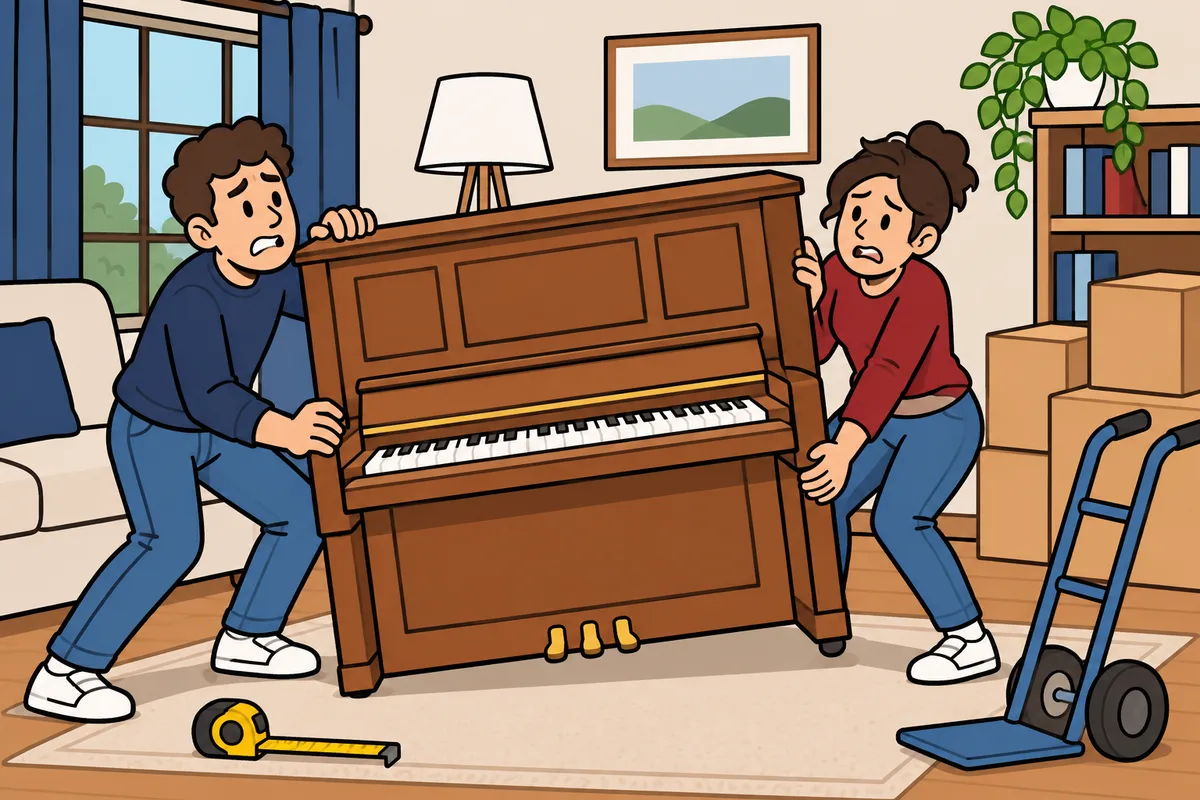
Two people are not enough for most pianos. Guides on the subject recommend at least 3 to 4 people for most pianos and suggest professionals for grands. The weights explain why. Typical ranges published by a mover marketplace:
- Spinet: about 200 to 400 lb
- Upright: about 300 to 800 lb
- Baby grand: about 500 to 650 lb
- Concert grand: up to about 1,200 lb
Moving it yourself makes sense only when all of these are true:
- The piano is a spinet or small upright.
- The move is on one level or uses a ramp, with no stairs.
- You have three or more adults who can lift safely.
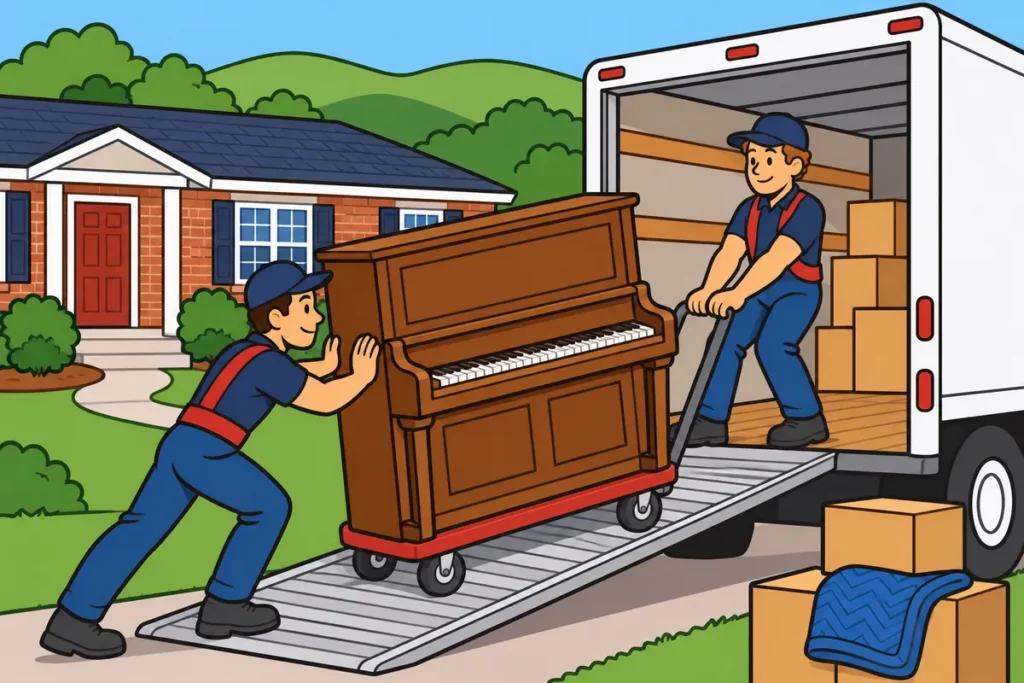
- You have a 4-wheel dolly, heavy pads and straps.
If any one of these is missing, the savings shrink fast against the cost of an injury or a cracked case.
Which piano types are the hard ones?
Look at the shape first. An upright or spinet stands tall against a wall with the strings running vertically. These usually move in one piece without taking anything apart.
A grand or baby grand has a horizontal, wing-shaped case. These do need partial dismantling: the legs and pedal assembly come off, and the body is set on a piano board, also called a skid. That is the point where most homeowners should stop and call a specialist.
What must be measured and cleared before moving day?
Walk the whole route, from the piano’s spot to the truck and from the truck to the new room, with a tape measure.
- Measure the piano’s width, depth and height.
- Measure every door, hallway and turn it must pass. Allow a few inches of clearance for pads and hands.
- Count the steps at both homes, including porch steps and any landing turns.
- Clear rugs, runners, plants and furniture from the path.
- Protect finished floors along the route.
- Check the driveway and walkway for gravel, slopes or wet spots, and plan the truck’s parking spot close to the door.
Doorframes and stair turns are the tightest points, so give them extra attention.
What does a professional crew do differently?
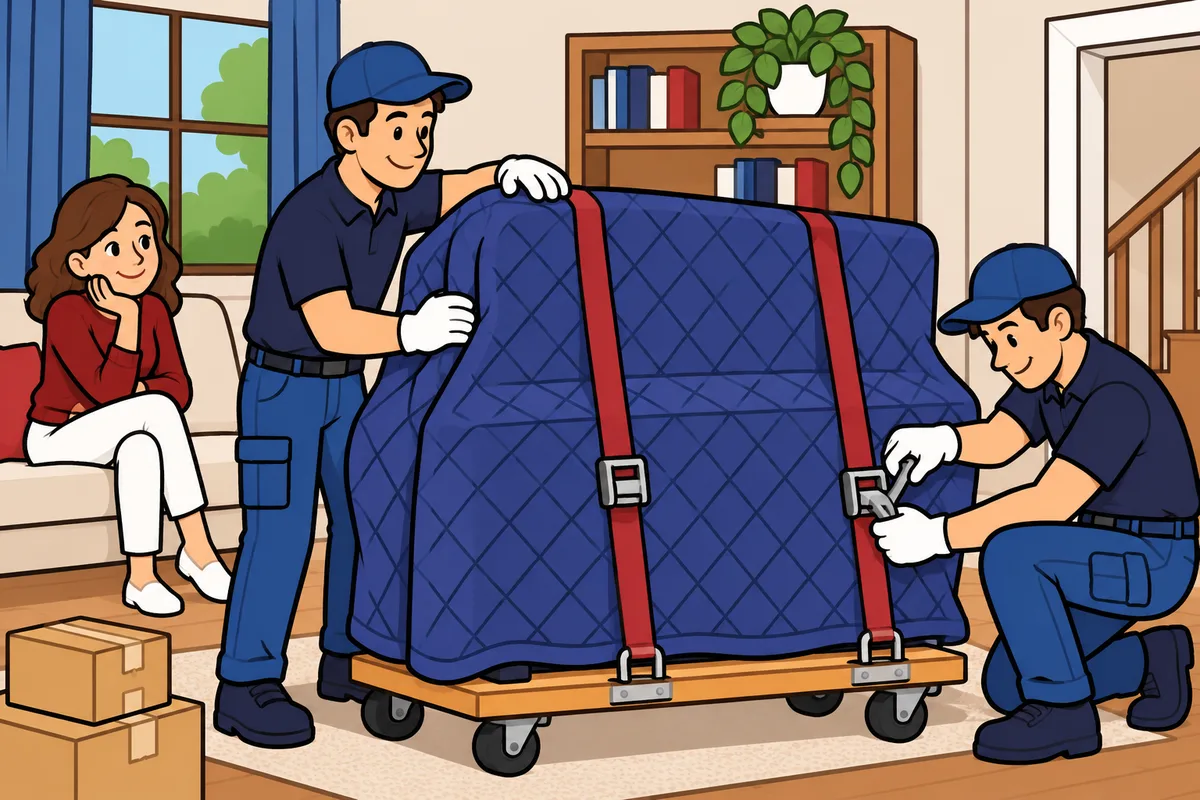
A crew brings gear and a plan most households do not have. Ask any mover these questions before you book:
- Do you wrap the piano in heavy-duty pads before it leaves the room?
- Do you use straps and a dolly, and how do you load it into the truck?
- How many movers come for my piano type and number of steps?
- Do you move grands, and do you use a piano board for them?
- Is the piano price fixed, and what changes it, such as stairs or a long carry?
- Are you insured, and can you send the paperwork?
Clear answers to these tell you whether the crew has done this before.
What should you do after the move?
Decide where the piano will stand before it arrives, so it gets placed once. Tell the crew the room and the wall when they unload.
Then ask a piano technician about tuning. Practice varies, so ask when they prefer to tune after a move.
Booking a piano move
Fast Track Movers charges $395 per piano on top of the hourly rate. The crew works with heavy-duty moving pads, 4-wheel dollies and shoulder lifting straps, and the 26 ft box truck has a ramp, so there is as little lifting as possible. Time on a local job is billed hourly, with 2 hours as the minimum and 30-minute steps after that. Each flight of stairs past the first costs $60, and so does a carry of more than 75 ft. Any extra goes on the bill only after you agree to it. Tell us the type of piano and how many steps are at each end when you call (423) 339-1641, Monday to Saturday 7 am to 6 pm or Sunday 8 am to 4 pm.
Quick answers
Is the piano charge added to the hourly rate?
Yes. The $395 piano charge is an extra on top of the move itself, which is billed by the hour.
Do I pay a deposit to book a local piano move?
No. You pay no deposit for a local move. The bill is paid when the move is done, and if plans change, tell the crew at least 48 hours ahead.